







3.1.26
TRUMP’S ECONOMY WILL COST GOP THE MIDTERMS
 By doubling down on his policies and ignoring the negative impacts of his economic agenda, President Trump is walking into the same messaging trap that cost Biden the election two years ago. Continue reading.
1.1.26
THE YEAR AI WENT BUST
 Part 4 of my artificial intelligence essay series. The current narrative surrounding AI skepticism typically lumps AI critics into two camps: Doomers and Denialists. This is a disingenuous framing used to conveniently deflect from the technology’s many shortcomings. Read my essay here.
11.1.25
IS THE AI BUBBLE ABOUT TO BURST?
 Part 3 of my essay series about artificial intelligence. For the last 3 years, we’ve been feeding an AI bubble. In early November, we got clearest indications yet that this bubble is about to burst.
Read the essay here.
Part 3 of my essay series about artificial intelligence. For the last 3 years, we’ve been feeding an AI bubble. In early November, we got clearest indications yet that this bubble is about to burst.
Read the essay here.
10.1.25
THE LEFT AND THE RIGHT DESERVE EACH OTHER
 The political discourse surrounding the murder of Charlie Kirk is a reminder that the left and the right reside in siloed confabulations of reality reinforced by algorithms, making the prospect of intellectually honest conversation from either group impossible. Read my essay here.
8.1.25
AI IS CREATIVE POISON
 Part 2 of my essay series about generative artificial intelligence. One of AI’s greatest existential threats is the potential impact it could have on the future of human creativity. Read the essay here.
7.1.25
AI WRITING IS GARBAGE
 Generative artificial intelligence is terrible at writing, and the people who have convinced themselves otherwise don’t know what they’re talking about. Read my essay here.
12.1.23
NEW SHORT STORY AVAILABLE
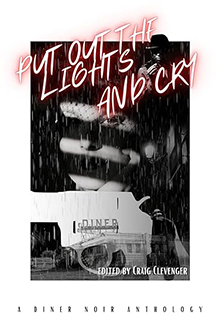 My newest short story, “Scar on Scar,” has been published in an anthology of “diner noir” stories titled Put Out The Lights and Cry, released by Outcast Press (edited by Craig Clevenger). It’s the longest story I’ve ever published (approx. 7,000 words). The book is available via Amazon in paperback or for Kindle.
10.1.23
PANEL APPEARANCE: 11.18.23
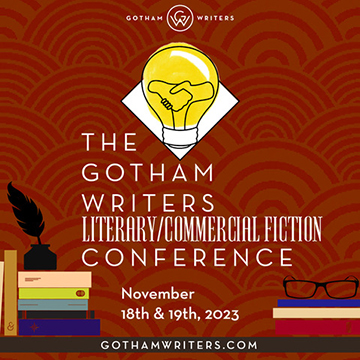 On Saturday, November 18, I'll be appearing on a panel as part of the Gotham Writers Literary/Commercial Fiction Conference. Panel is @ 12:15 p.m. and is titled “What's After The Book Deal?” I'll be joined by author Mateo Askaripour (Black Buck), agent Sarah Khalil (Calligraph), and Rita Chang-Eppig (moderator). Register here.
5.12.23
'THE APPETITE FACTORY' AVAILABLE ON AUDIBLE
My novel, The Appetite Factory, is now available on Audible. If audiobooks are your thing, check it out!
1.16.23
ESSAY IN THE GUARDIAN
 I wrote an essay in the Guardian about losing my eyesight and the challenges of writing while managing a disability. Please give it a read.
View Essay »
8.23.22
'THE APPETITE FACTORY' NOW AVAILABLE
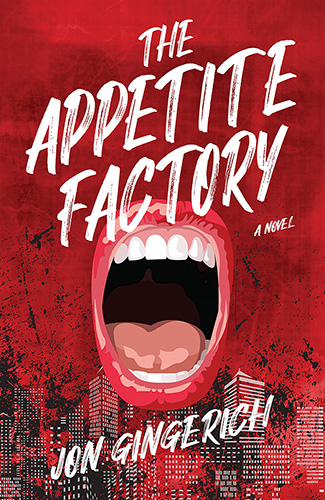
My debut novel,The Appetite Factory (Turner Publishing Company), is now officially available.
You can also buy the book from Amazon, Barnes & Noble, Target, Thrift Books, Bookshop, Wal-Mart, and Blackwell’s (UK). Or check your local bookstore!
Your support is greatly appreciated!
Can we collectively agree to please stop referring to absolutely everything as “trauma?” Breaking up with your boyfriend isn’t “trauma.” Having a story rejected by a journal or being turned down for a job you’re unqualified for isn’t “trauma.” Jesus Christ.
— Jon Gingerich (@GingerichJon) April 15, 2026